


Choosing Vinyl Wear Layers for Your Home
A vinyl floor can look nearly identical in a showroom at 6 mil and 20 mil, yet perform very differently once chairs slide across it, wet boots come through the entry, and a family dog races down the hall. Choosing vinyl wear layers is one of the most useful ways to compare click vinyl flooring beyond colour, plank width, and price. It helps you buy enough protection for the way you live without paying for commercial-level performance you may never need.
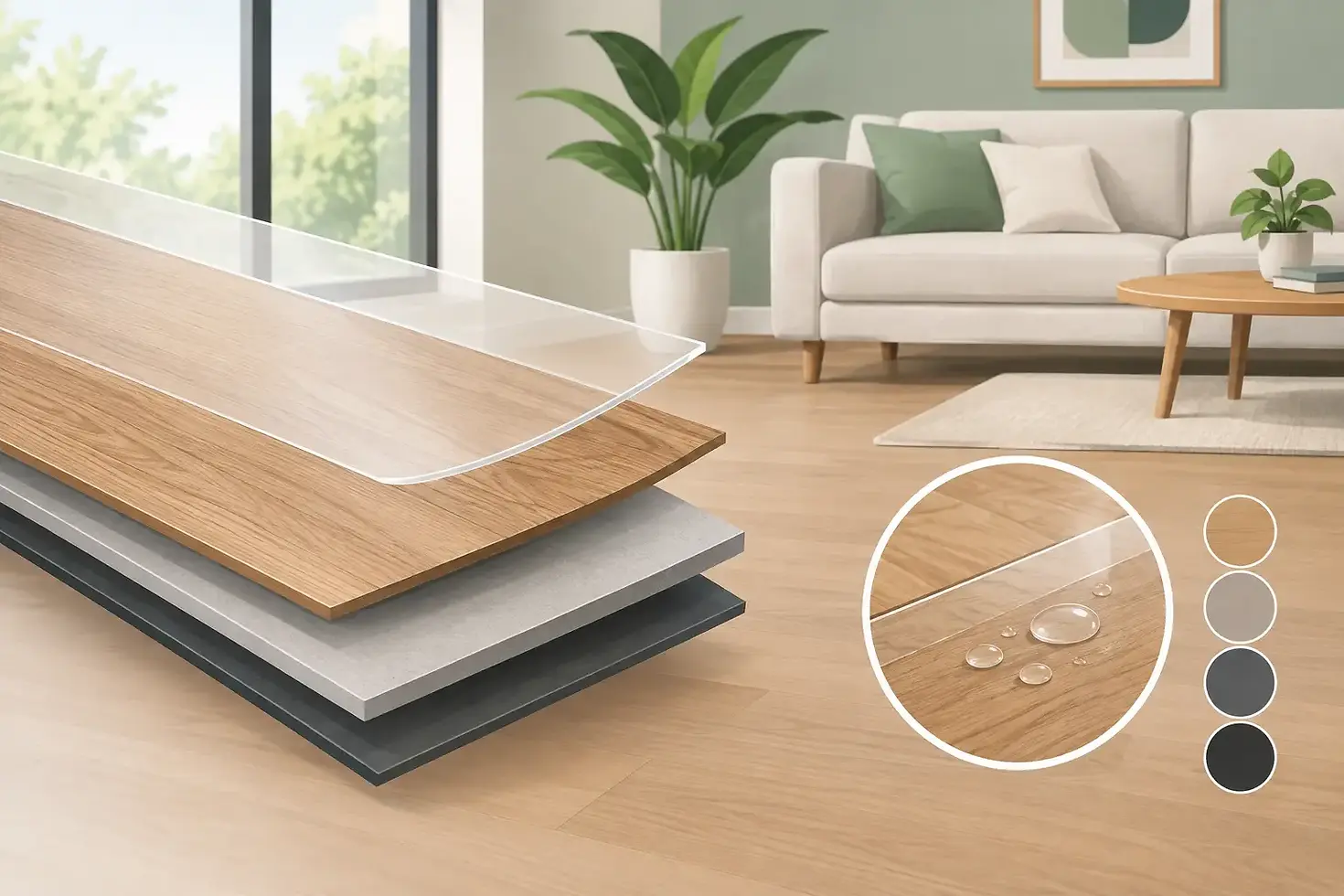
The wear layer is the clear protective surface above the printed wood or stone design. It is designed to resist everyday scratches, scuffs, stains, and wear from foot traffic. It is not the same as the total thickness of the vinyl plank, and it is not a promise that the floor cannot be damaged. A thicker wear layer generally gives you more room for real-life use, but the right choice depends on the room, the household, and the quality of the full product.
What a vinyl wear layer actually does
Luxury vinyl plank and luxury vinyl tile are built in layers. Beneath the clear wear layer sits the decorative film that gives the floor its oak, maple, stone, or concrete appearance. Below that are the vinyl core, backing, and, on many click products, an attached underpad. The wear layer is the first line of defence against surface damage.
Manufacturers usually measure it in mil, which means one-thousandth of an inch. This is different from millimetres. A 12 mil wear layer is 0.012 inches thick, not 12 mm. Because the terms sound similar, it is worth checking the product specifications carefully when comparing floors.
Wear-layer thickness can affect how well a floor handles repeated abrasion, but it is only one piece of performance. The top coating also matters. Good UV-cured finishes and ceramic-bead or aluminum-oxide coatings can improve scratch and stain resistance. The strength of the click system, the stability of the core, proper subfloor preparation, and correct installation all influence how the completed floor performs.
Choosing vinyl wear layers by room and traffic
For many homes, 12 mil is a sensible starting point. It offers a practical balance of price and durability for bedrooms, living rooms, dining areas, and moderately used basements. A carefully selected 12 mil product from a reputable flooring brand can be an excellent choice for a household without large dogs or heavy daily traffic.
For busier family spaces, a 20 mil wear layer is often the better investment. Consider it for kitchens, main-floor hallways, open-concept living areas, mudrooms, and homes with active children or pets. These are the rooms where chairs move often, grit is tracked in, and small spills are most likely to happen. The added protection can bring useful peace of mind, especially in a renovation intended to last for many years.
Entryways deserve special attention. Salt, sand, small stones, and moisture are harder on flooring than ordinary foot traffic. A 20 mil product is a strong choice here, paired with quality mats inside and outside the door. Even a thick wear layer benefits from regular sweeping, since abrasive grit can scratch any hard surface over time.
Higher wear layers, such as 22 mil or more, are typically aimed at demanding residential use and light commercial settings. They can make sense for rental properties, home businesses with client traffic, busy multi-pet households, or small retail and office areas. For a quiet guest room, however, the upgrade may not produce a noticeable benefit. This is where matching the product to the project protects your budget.
A practical residential guide
As a general guide, 6 mil products are best reserved for low-traffic spaces or value-focused projects where expectations are modest. A 12 mil wear layer suits many standard residential rooms. A 20 mil wear layer is a dependable target for active homes, kitchens, halls, and pet-friendly spaces. Products at 22 mil and above are worth considering where traffic is unusually heavy or where a stronger warranty and commercial rating are part of the plan.
These ranges are helpful, not absolute. A well-made 12 mil floor with a quality finish may be a better long-term purchase than a poorly built 20 mil floor. Compare the full construction and warranty rather than buying on the largest mil number alone.
Pets, chairs, and daily habits matter more than square footage
A large home does not automatically need the thickest wear layer everywhere. A compact condo with two large dogs may put more stress on its flooring than a larger home occupied by two adults. Think about how each space is used, not just how much flooring you are buying.
Pets bring claws, water bowls, and occasional accidents. Vinyl is a practical option because it is easy to clean and many click vinyl products are water-resistant or waterproof at the plank surface. Still, choose a stronger wear layer for the areas your pets use most, and keep nails trimmed. No wear layer can fully prevent damage from sharp claws, dragged furniture, or grit trapped beneath a chair leg.
Dining chairs and kitchen stools are another consideration. Felt pads should be used under furniture legs, and chairs with worn or hard casters should be replaced or fitted with suitable floor protectors. A thicker wear layer is helpful, but simple care habits will do more to preserve the finish than moving from 12 mil to 20 mil in a lightly used room.
Do not confuse wear layer with plank thickness
A 5 mm vinyl plank with a 20 mil wear layer and a 7 mm plank with a 12 mil wear layer are not directly comparable. Total thickness affects the feel underfoot, the strength and profile of the click connection, the ability to bridge minor subfloor variation, and transitions to nearby rooms. The wear layer addresses surface durability.
When selecting click vinyl flooring, look at both numbers. A thicker overall plank can feel more substantial and may offer a stronger locking system, while the wear layer helps protect its appearance. Also ask whether the product includes an attached underpad and whether it is approved for the subfloor and room conditions in your home.
Subfloor preparation remains essential. Vinyl flooring follows the surface beneath it, so dips, humps, loose areas, and uneven seams may telegraph through over time or place pressure on click joints. Spending properly on preparation is often a better decision than simply upgrading to the highest available wear layer.
Warranties are useful, but read the details
Wear-layer ratings and warranties provide a useful comparison point, particularly when evaluating recognized brands side by side. However, a residential warranty usually covers manufacturing defects and qualifying wear, not every scratch, dent, stain, or installation issue. Damage from moving appliances, moisture entering from an unapproved source, improper cleaning products, or inadequate floor protection may be excluded.
Ask what the warranty covers, whether it applies to your intended room, and whether professional installation or specific underlayment requirements apply. This is particularly relevant for condos, rental units, basements, and spaces with hydronic radiant heating. The product needs to suit the installation conditions as well as the traffic level.
Build the floor around the whole renovation
Vinyl flooring often connects several spaces at once: an entry leads into a hall, the hall opens to a kitchen, and the kitchen may meet a renovated staircase or a flush-mounted floor vent. Choosing one product with the right wear layer is only part of creating a finished result. Consider plank direction, threshold transitions, baseboards, vents, and stair finishes before ordering.
A floor colour sample should be viewed beside cabinets, paint, existing trim, and stair components. Grey-toned floors can look very different beside warm oak railings, while natural oak visuals may make it easier to coordinate wood vents and stair treads. Planning these details together avoids last-minute compromises and helps the renovation feel intentional.
For Ontario homeowners comparing click vinyl options, Q Flooring can help narrow the selection by traffic level, room conditions, design preference, and budget, then coordinate delivery, installation, and finishing details. Bringing photos, measurements, and a sample of cabinet or paint colour to the showroom makes that conversation much more productive.
The best wear layer is not automatically the thickest one on the rack. It is the one that suits your busiest rooms, your daily routines, and the life you expect from the floor - with enough budget left to install it properly and finish the project well.


Comments